
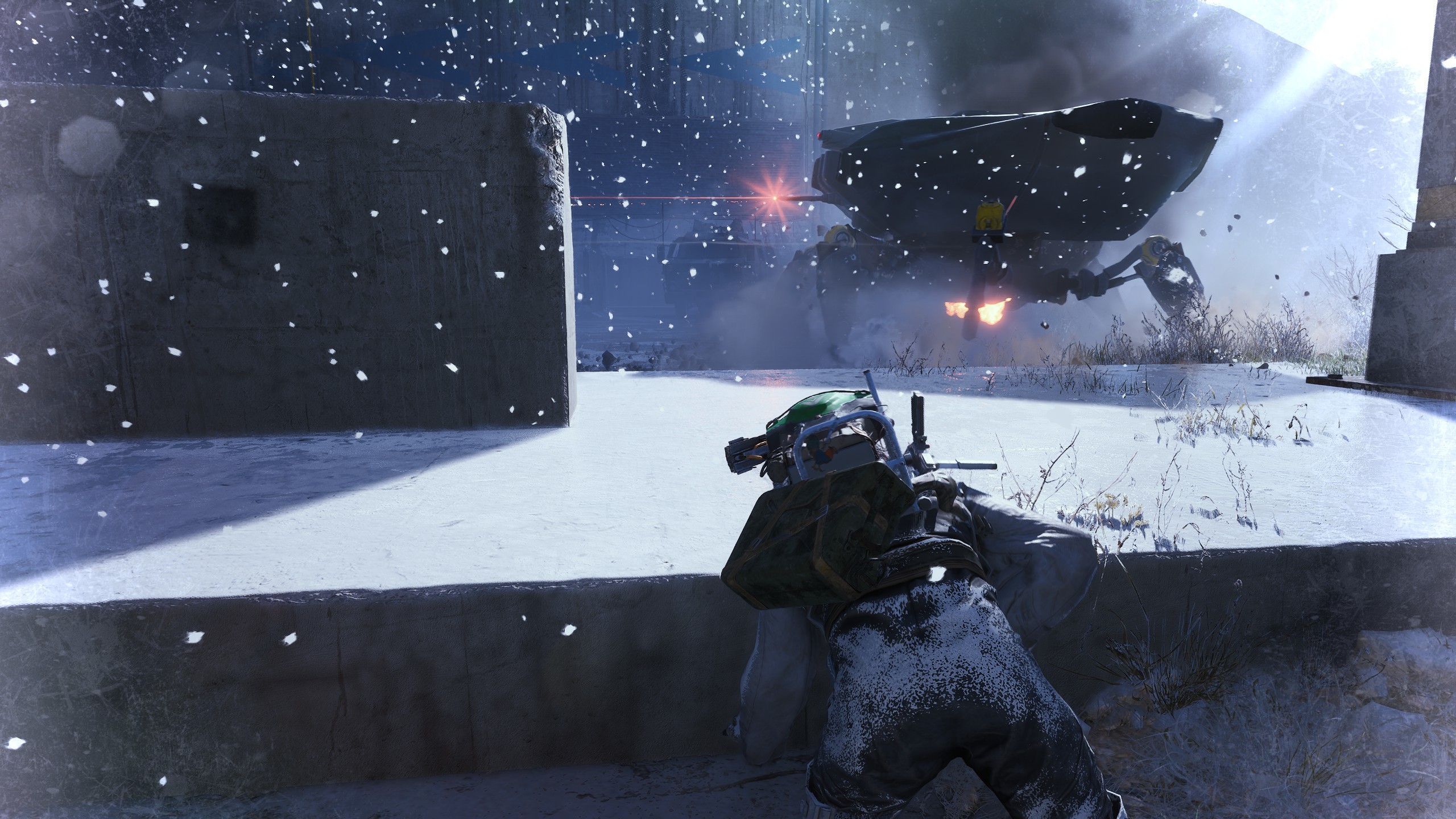
The ubiquitous ‘Blue Light’ emitted by most ARC units—a low-intensity, forward-facing optical sensor sweep—is the primary indicator of the machine network’s passive surveillance mode. Understanding the precise range and sensory characteristics of this blue light is crucial for executing effective covert operations (ASW). **Blue Light Evasion (BLE)** is the specialized doctrine dedicated to exploiting the limitations of this optical system, ensuring Raiders can traverse high-risk areas without triggering the ARC’s active engagement protocol.
This analysis details the specific mechanics of the blue light detection system, outlining the necessary movement, cover utilization, and sensory mitigation required to remain unseen.

The Principle of Cone Projection and Optical Failure
The ARC Blue Light operates as a narrow, low-frequency optical cone, optimized for detecting linear movement. Its primary weakness is its **Optical Failure Rate** outside the cone’s immediate projection. Unlike omni-directional radar, the blue light requires direct line-of-sight and is easily defeated by physical obstacles, even low-density cover.
- **BLE Protocol:** Never cross directly in front of the blue light cone. Always maintain movement parallel to the cone’s direction, utilizing structural debris to break the line of sight.
Evasion Through Vertical and Lateral Movement (VHS)
The verticality of X-Isle is the easiest counter to the blue light. ARC units are programmed to scan the most likely human heights. Utilizing the Grappling Hook (VHS) to ascend or drop rapidly immediately moves the Raider out of the predictable scanning range. Similarly, BLE mandates aggressive lateral movement across the cone’s edge, utilizing angular deflection to minimize the time spent in the direct sweep.
Mitigation of Secondary Detection Signatures

While the blue light is optical, the ARC unit’s internal network utilizes redundant systems. BLE mandates that Raiders must eliminate the secondary signatures that accompany a blue light detection, preventing the system from confirming a contact:
| Signature Type | Mitigation Required | Tactical Rationale |
|---|---|---|
| **Acoustic** | Absolute silence (ASM); avoid sprinting on hard surfaces. | Prevents the acoustic sensor from confirming the optical target. |
| **Thermal** | Low movement speed; utilize thermal sinks (water/cold debris). | Denies the ARC unit the ability to verify the visual contact with a heat lock. |
The Trigger to Active Engagement (Red Light)
The blue light shifts to the aggressive Red Light the moment the ARC unit’s processor achieves a confident lock on the target’s position and profile. BLE dictates that any rapid, high-intensity action (sprinting, kinetic fire) within the blue light’s range guarantees the shift to Red Light. Raiders must prioritize stillness and slow movement when exposed to the passive sweep.
Conclusion: The Art of the Near Miss

Blue Light Evasion is the cornerstone of covert operational success. By understanding the optical limitations and sensory dependencies of the passive ARC sweep, Raiders transform the enemy’s surveillance into a predictable pattern that can be navigated. The successful execution of BLE confirms that knowledge and disciplined movement are the ultimate counter to mechanical surveillance.